Buying Perlite in Bulk for Tropical Containers: Coarse vs. Medium Grade and How Much You Actually Need
If you’ve never worked with perlite before, here’s the short version: it’s those tiny white beads mixed into commercial potting soil — they look like small foam pellets but are actually volcanic glass that’s been superheated until it pops, like popcorn. Because it’s porous and extremely lightweight, it holds just enough air and moisture to keep roots happy while letting excess water drain away fast. For tropical plants in containers — think anthuriums, heliconias, bird of paradise, and plumeria — fast drainage isn’t optional. Roots sitting in waterlogged soil will rot within days in Hawaii’s humid conditions. If you’re building out a serious collection or filling multiple large planters, buying perlite in small retail bags gets expensive and logistically tedious fast. This guide walks you through the two grades that matter most for tropical containers, the actual math on how much you need, and a structured comparison of the three main buying tiers so you can order with confidence.
Why Perlite Grade Matters More Than Most Guides Admit
Walk into any big-box garden center and you’ll find one bag labeled “perlite.” Walk into a specialty horticultural supplier and you’ll find at least three particle sizes. For tropical container work, the practical universe narrows to two: medium grade (roughly 1–3 mm particles) and coarse grade (roughly 3–6 mm particles). Fine-grade perlite — the dusty, powdery stuff — is primarily a seed-starting and propagation medium and is largely irrelevant here.
The University of Florida IFAS Extension, in their publication Growing Media for Containerized Plants, explains that particle size directly governs the balance between air-filled porosity and water retention in a container mix. Larger particles create larger pore spaces, which drain faster and hold more air. Smaller particles hold more capillary water between them. For tropical plants, you’re not choosing between “good drainage” and “bad drainage” — you’re calibrating drainage speed to root behavior.
Here’s where it gets specific at the cultivar level:
Medium grade (1–3 mm) behaves like the perlite in most commercial tropical mixes. It retains moderate moisture between particles, which suits plants that want consistent but not standing moisture. Anthuriums, most gingers, and bird of paradise (Strelitzia reginae and S. nicolai) land in this camp. The University of Hawaii at Manoa College of Tropical Agriculture and Human Resources, in their container media guidelines for tropical ornamentals, notes that aroids and heliconias benefit from moisture-retentive but well-aerated media, and medium perlite mixed at 20–30% by volume achieves that range.
Coarse grade (3–6 mm) is the right call for plants with thick, succulent-adjacent roots that need aggressive drainage — plumeria (Plumeria rubra cultivars and alba types) being the classic example. Plumeria roots are highly susceptible to rot if moisture lingers, and growers shipping premium cultivars from Hawaii-origin nurseries consistently recommend mixes with 30–50% coarse perlite or pumice by volume. The Spruce, in their overview How to Choose and Use Perlite in Potting Mix, confirms that coarse formulations are the standard recommendation for anything in the succulent and tropical-arid crossover category.
The tradeoff to name explicitly: coarse perlite drains so aggressively that fine-rooted tropicals — young anthuriums, small heliconia divisions, recently rooted cuttings — can dry out at the root zone before the top inch of mix reads as dry to the touch. You’ll underwater them by feel. Medium grade is more forgiving for inexperienced waterers and for plants still establishing their root system.
Comparing the Three Buying Tiers: Retail Bags vs. Mid-Bulk vs. Full Bulk
This is where the commercial decision lives. The grade you choose matters, but so does the quantity tier you order at — and these interact. Below is a structured comparison of the three main ways gardeners buy perlite for container work.
H3: Retail Bags (Under 4 Cubic Feet of Need)
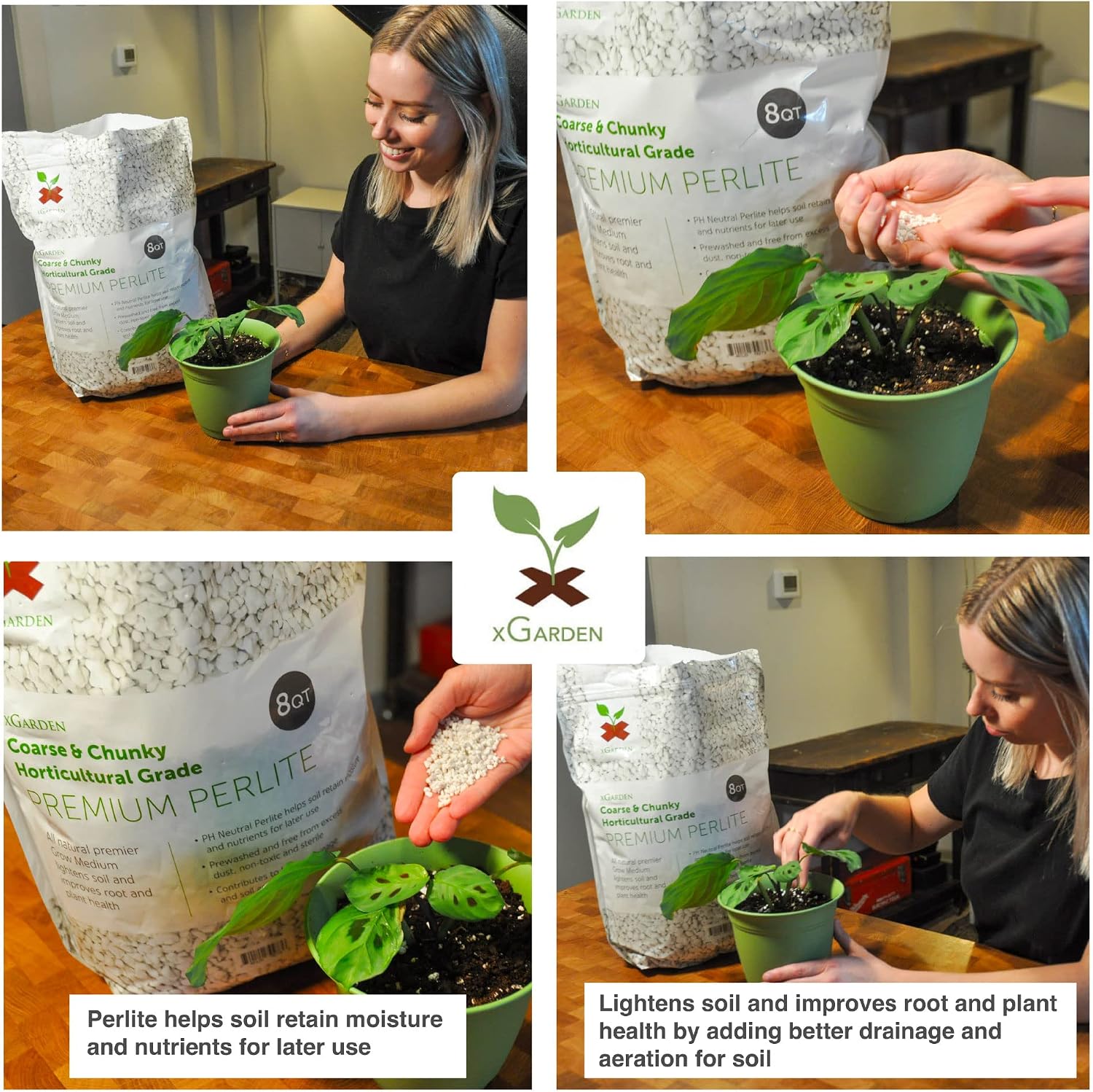
Standard retail perlite bags run 8 quarts (~0.27 cubic feet) and are the default purchase for gardeners filling fewer than six containers per season. Medium grade is nearly universally available at this tier. Coarse grade is harder to find in retail format — most stores stock only one ungraded or medium-grade product.
Pros: No minimum order, no shipping costs, immediately available, easy to store.
Cons: Per-cubic-foot cost is the highest of the three tiers, typically $6–$9 per cubic foot at 2026 pricing. Coarse grade is often unavailable, forcing a special order or substitution. Buying 7–8 bags for a single large project is physically awkward and wasteful of packaging.
Best for: Gardeners with 1–5 containers, those testing a new mix ratio before committing, or anyone adding perlite to an existing established collection with minimal expansion planned.
 product image](/images/external/73e5a191c8f7.jpg)
Espoma
$10.92
In stock on Amazon
Check price on AmazonH3: Mid-Bulk Bags (4–8 Cubic Feet)
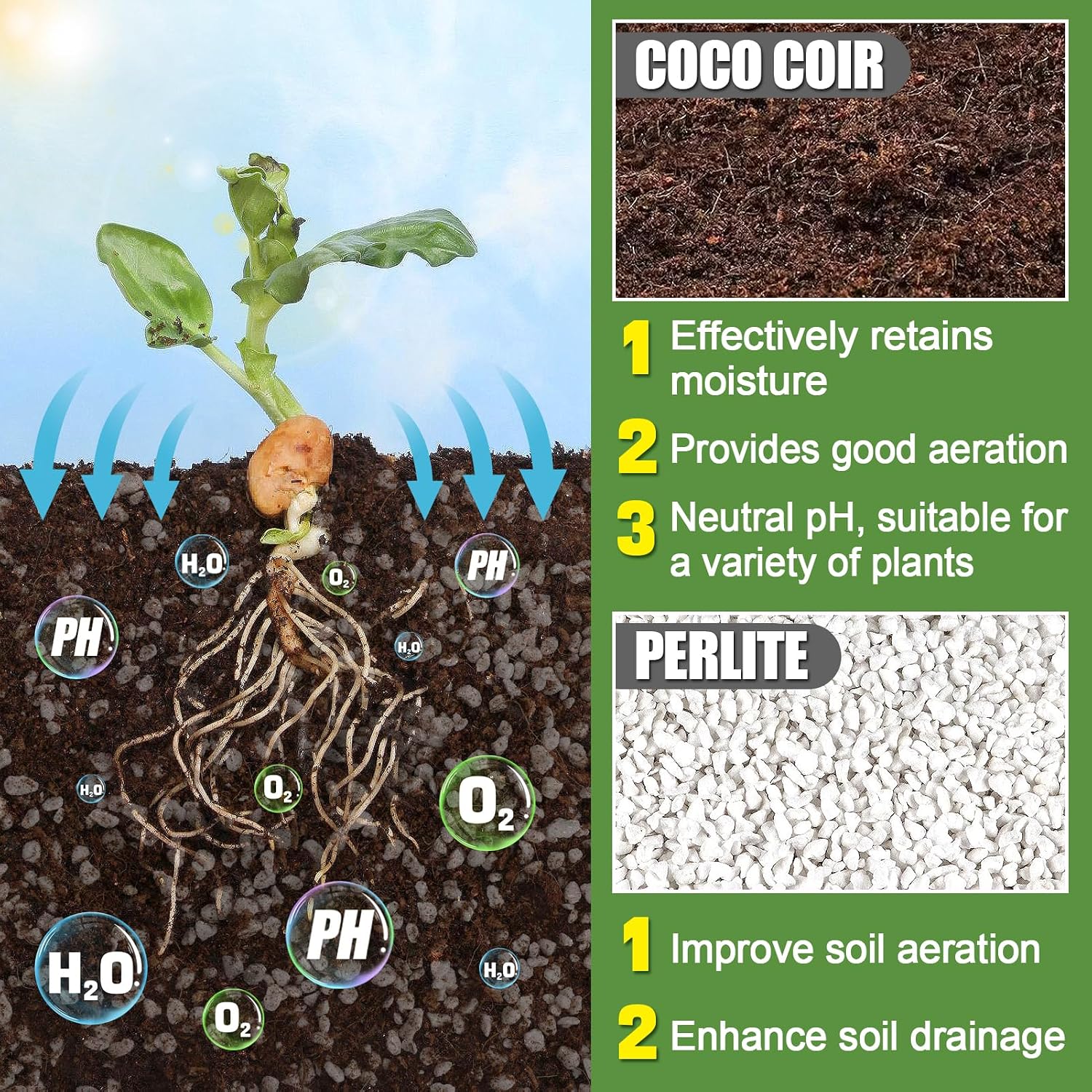
The mid-bulk tier — typically 2-cubic-foot or 4-cubic-foot bags from horticultural suppliers — is where bulk economics begin to meaningfully outperform retail. A 4-cubic-foot bag of medium or coarse perlite from a regional agricultural supplier or horticultural wholesaler runs approximately $28–$42 depending on grade and supplier, bringing per-cubic-foot cost to roughly $7–$10 before shipping. When purchased locally (eliminating freight), this tier consistently beats retail pricing.
At this tier, both medium and coarse grades are reliably available if you’re ordering from a horticultural supplier rather than a general garden center. Fine Gardening, in their article on amending container soil for drainage, notes that sourcing amendment materials at the horticultural-supply level rather than retail gives gardeners access to more precise particle-size specifications — a meaningful advantage when you need a specific grade for plumeria versus anthurium work.
Pros: Covers 10–30 containers depending on pot size and mix ratio. Coarse grade available. Economically meaningful savings over retail at local pickup pricing.
Cons: Shipping costs on heavy bags can erode savings if you’re ordering online. Requires storage space for partial bags between uses.
Best for: Gardeners with 6–20 containers, mixed collections spanning plumeria and aroids, or anyone repotting a collection on an annual cycle.
Coco
$26.99
In stock on Amazon
Check price on AmazonH3: Full Bulk Orders (8+ Cubic Feet)
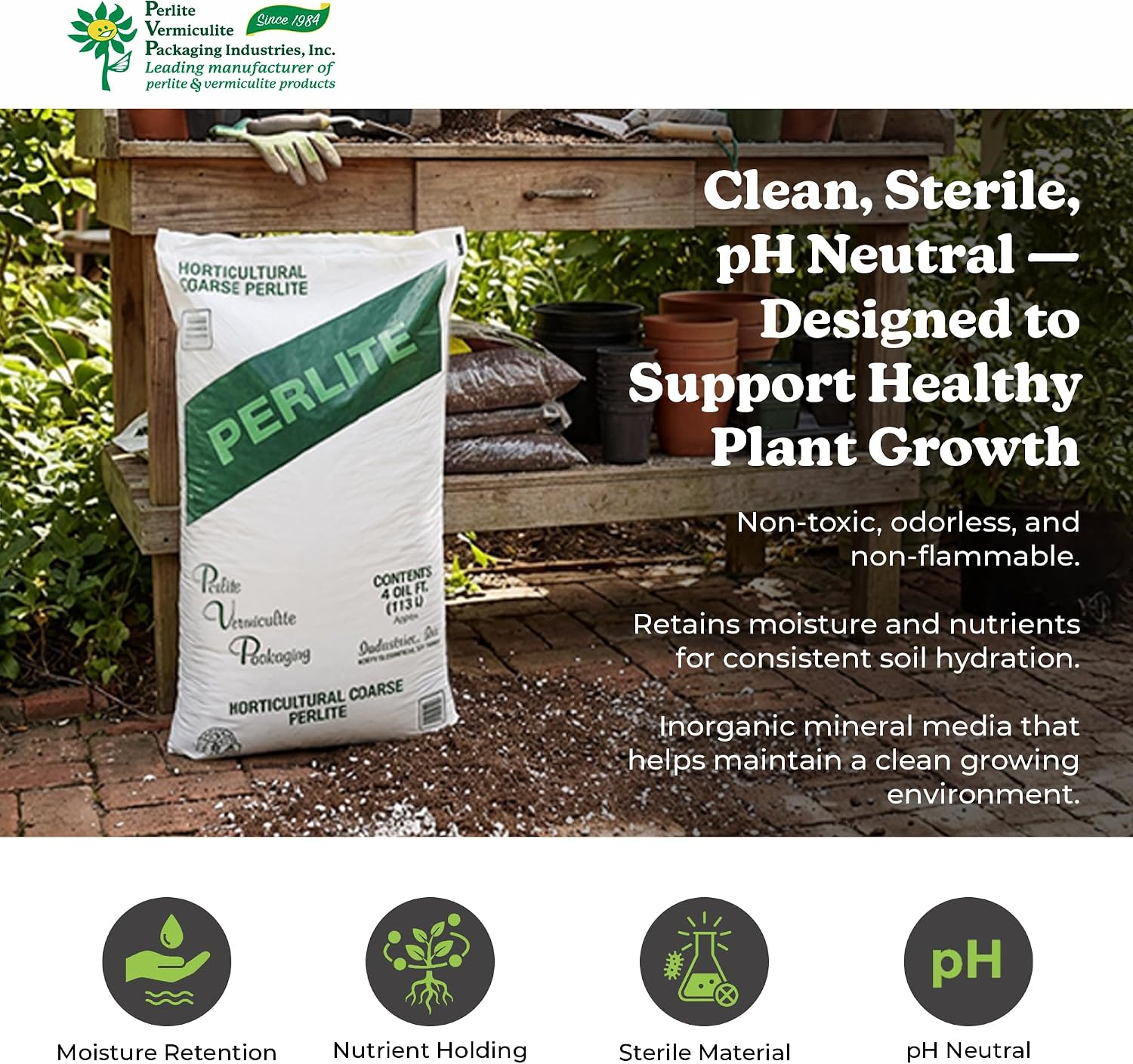
At 8 cubic feet and above — typically sold in supersacks, large poly bags, or pallet quantities — per-cubic-foot pricing drops another 20–35% compared to the mid-bulk tier. This is the buying level used by small nurseries, serious hobbyists maintaining 30+ containers, and anyone mixing custom potting media in volume.
The University of Florida IFAS Extension’s Growing Media for Containerized Plants supports blended particle sizes as a way to tune air-to-water ratios for mixed collections. At full bulk order quantities, buying separate coarse and medium grades and blending them on-site becomes economically practical — you’re not paying retail premium for two product SKUs.
The Spruce’s perlite overview notes that storage is the primary operational constraint at this tier: perlite is stable indefinitely if kept dry, but the fine particles that come with any grade become airborne in open bags. Sealed storage containers or covered bulk bins are necessary at this volume.
Pros: Lowest per-cubic-foot cost. Enables custom blending of coarse and medium grades. Practical for growers expanding collections aggressively or mixing media for multiple plant types simultaneously.
Cons: Higher upfront cost, significant storage requirement, freight cost can be substantial unless pickup is available. Overkill for collections under 20–25 containers.
Best for: Serious collectors with 25+ containers, growers who mix their own potting media from scratch, or small nursery operations.
PVP
$55.44
In stock on Amazon
Check price on AmazonVolume Math: How Much Perlite Do You Actually Need
Before you place an order, run this calculation so you’re not guessing at the garden center or overshooting your storage capacity.
Conversion baseline: 1 gallon of pot volume = approximately 0.134 cubic feet of growing medium.
Quick volume reference (approximate, 25–30% perlite in mix):
| Container size | Mix volume needed | Perlite at 25% |
|---|---|---|
| 5-gallon pot | 0.7 cu ft | ~0.17 cu ft |
| 15-gallon pot | 2.0 cu ft | ~0.50 cu ft |
| 25-gallon pot | 3.5 cu ft | ~0.87 cu ft |
| (10) 5-gallon pots | 7.0 cu ft | ~1.75 cu ft |
| (10) 15-gallon pots | 20.0 cu ft | ~5.00 cu ft |
A standard retail bag of perlite is 8 quarts (~0.27 cu ft). Filling ten 5-gallon containers at 25% perlite consumes roughly 6–7 retail bags. A 4-cubic-foot mid-bulk bag covers that same job with material left over, and at local pickup pricing the savings are real. The math favors bulk at approximately 6+ cubic feet of need. Below that threshold, retail bags are price-comparable once you factor in minimum shipping charges on bulk orders.
Coarse vs. Medium: The Plant-by-Plant Decision
This framework should resolve the grade question for most collections.
Choose coarse grade if:
- Your collection is predominantly plumeria — any cultivar, any origin. Plumeria roots are highly susceptible to rot if moisture lingers at the root zone, and the standard recommendation from specialty plumeria growers consistently calls for 30–50% coarse perlite or pumice in the mix. Fine Gardening’s guidance on container soil amendments specifically highlights fast-draining media for plants with fleshy, rot-prone roots.
- You’re in a high-humidity zone (Hawaii residents, coastal Southeast) where evaporation from the mix is slow. Coarse perlite compensates by draining faster than the atmosphere can slow it down.
- You’re running automated drip irrigation on a timer — coarse perlite buffers against overwatering cycles that fixed schedules can produce.
- You’re potting large, established specimens in 15-gallon-plus containers where root mass is thick enough to handle faster drying.
Choose medium grade if:
- Your collection leads with anthuriums, heliconias, gingers (Zingiber, Hedychium, Alpinia), or bird of paradise. The Missouri Botanical Garden’s anthurium cultivation notes emphasize consistent moisture at the root zone — not wet, but never bone dry — which medium perlite supports better than coarse.
- You’re working with young plants, recent divisions, or rooted cuttings that haven’t established a substantial root system yet. Smaller roots can’t reach the moisture stored deeper in coarse perlite; medium grade keeps hydration accessible closer to the surface.
- You’re growing in smaller containers (under 7 gallons) where the mix volume dries out quickly regardless of grade.
The hybrid approach — blending 60% medium with 40% coarse — is a practical middle path for mixed collections where one bulk order needs to cover multiple plant types. The University of Florida IFAS Extension’s growing media guidance supports blended particle sizes as a way to tune air-to-water ratios without committing to a single grade. This is particularly useful if you’re managing plumeria, anthuriums, and gingers simultaneously.
Sourcing Notes for Hawaii Gardeners
For residents on Oahu, Maui, and the Big Island, local sourcing is almost always more economical than mainland shipping on a heavy product like perlite. Both Oahu and Maui have agricultural supply operations that stock horticultural perlite by the cubic foot. The University of Hawaii at Manoa CTAHR extension network maintains resources on local soil amendment suppliers; contacting your island’s county extension office is a reliable starting point for identifying current local sources, particularly for coarse grade, which is less universally stocked than medium.
Grade availability note for all buyers: Medium grade is the industry default and is widely available at every tier. Coarse grade is less universally stocked — if you’re ordering online, confirm explicitly that what you’re ordering is labeled “coarse” or “large particle” and lists particle size at 3 mm or larger. Some products labeled simply “horticultural perlite” without a grade designation default to medium. Check the product spec before committing to a full bulk order.
The Practical Order Checklist
Before you place your bulk order, run through this:
- Count your containers and calculate total mix volume needed (pot gallons × 0.134 = cubic feet; multiply by 0.25–0.35 for the perlite fraction).
- Categorize your plant list — plumeria and succulents go in the coarse column; anthuriums, heliconias, birds of paradise, and gingers go in the medium column. If both columns have significant entries, consider the hybrid blend.
- Check your local agricultural supply source first for coarse grade specifically — if they stock it, freight savings typically outweigh any small price difference versus online bulk suppliers.
- Set a minimum-viable order quantity at 4–6 cubic feet. Below that threshold, retail bags are nearly price-equivalent and require no shipping cost management.
- Store excess in a sealed container — perlite doesn’t degrade, but fine particles in any grade will become airborne and messy in an open bag.
The decision is straightforward once you know your plant list and watering habits. If you’re managing a mixed tropical collection and want one bulk purchase to cover everything through a full growing season, medium grade at 25–30% handles the widest range of species. If plumeria is your primary investment — and at $150–$400 per premium named cultivar, protecting those roots is worth the extra consideration — coarse grade is the right call, with mix ratios ranging up to 40–50% for established specimens in large containers. Know your plants, run the volume math, pick your tier, and order once.