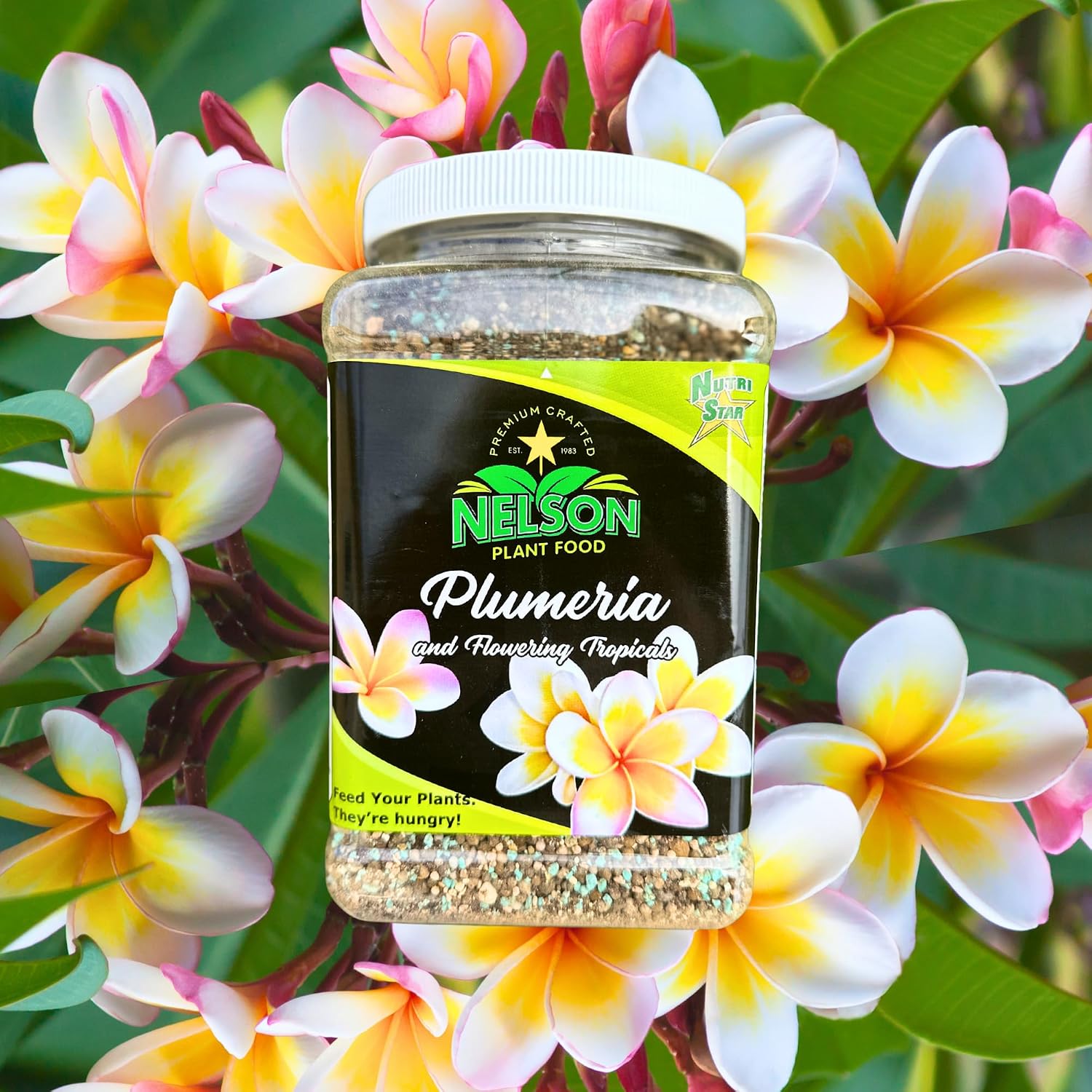
If you’ve landed here wondering why your plumeria keeps putting out lush green growth but almost no flowers, you are absolutely in the right place. Plumeria (also called frangipani — those thick-stemmed tropical trees famous for their intensely fragrant, five-petaled blooms used in Hawaiian lei) are not difficult plants, but they are specific about one thing: nutrition. Feed them the wrong ratio of nutrients and they’ll reward you with foliage instead of flowers. Get it right, and a single established specimen can carry dozens of bloom clusters at once through an entire summer season. This guide is a practical decision framework — covering the three numbers on every fertilizer bag (NPK, explained below), the seasonal timing window that makes or breaks your results, and an honest comparison of the fertilizer products that growers consistently recommend. Whether you’re managing a container plumeria on a mainland patio or a full hedgerow in Kona, the core logic is the same.
Understanding NPK and Why the Ratio Matters More Than the Brand
Every bag of fertilizer carries three numbers separated by hyphens — something like 10-30-10 or 11-48-0. These are the NPK ratio: the percentage by weight of Nitrogen (N), Phosphorus (P), and Potassium (K) in that order. Each element does a distinct job.
- Nitrogen (N) drives vegetative growth — stems, leaves, and overall canopy size. It’s the “green-up” nutrient.
- Phosphorus (P) is the bloom engine. It supports root development and, critically for plumeria, initiates and sustains flower production.
- Potassium (K) bolsters overall plant health, stress tolerance, and disease resistance.
The University of Hawaii CTAHR’s Plumeria Production and Care guide is explicit on the tradeoff: plumeria pushed with high-nitrogen fertilizers will grow vigorously but redirect energy away from flowering. The University of Florida IFAS Extension publication on plumeria in the landscape echoes this, recommending a fertilizer where phosphorus equals or significantly exceeds nitrogen for bloom induction.
The practical rule: For bloom production, you want a mid-to-high-P formula — something in the range of 10-30-10, 11-48-0, or even 0-46-0 superphosphate as a targeted bloom-kick application. For early-season green-up and root establishment on a newly potted cutting, a balanced formula (like 10-10-10) is acceptable briefly — then pivot to high-P once the plant is rooted and growing.
The Numbers at a Glance
| Growth Goal | Target NPK Pattern | Example Formula |
|---|---|---|
| Root establishment (new cuttings) | Balanced | 10-10-10 |
| Bloom induction | High P, moderate N/K | 10-30-10 |
| Maximum bloom push | Very high P | 11-48-0 |
| End-of-season hardening | Low N, moderate K | 3-12-12 |
Timing: The Seasonal Window That Most Growers Get Wrong
Getting the NPK right is half the equation. The other half is when you apply it — and this is where well-intentioned growers consistently leave blooms on the table.
Spring Activation (March–May for most mainland zones, February–April in Hawaii)
Plumeria emerge from dormancy or slow growth with a metabolic hunger for phosphorus. Fine Gardening’s feature on fertilizing tropicals for summer bloom notes that the spring feeding window — when new leaf tips are actively unfurling — is the highest-leverage moment in the entire season. Apply a high-P granular fertilizer (10-30-10 or similar) at this stage and you’re stacking the conditions for summer flower initiation.
Apply a balanced 10-10-10 or a mild nitrogen feed only if your plant is a fresh cutting still establishing roots. For anything that has been in the ground or a container for a full season or more, skip straight to high-P.
Active Bloom Season (June–September)
During peak bloom, The Spruce’s overview of plumeria fertilizing recommends maintaining a consistent feeding schedule every 4–6 weeks with your high-P formula. Do not switch to a nitrogen-heavy fertilizer during this window — it’s one of the most common mistakes. Growers chasing faster growth mid-season inadvertently shut down the bloom cycle they worked all spring to initiate.
If blooms are stalling mid-season despite consistent feeding, a targeted foliar spray with a diluted high-P liquid fertilizer (applied early morning when temperatures are below 85°F) can restart the cycle within 10–14 days. Missouri Botanical Garden’s plumeria profile notes that phosphorus uptake is temperature-sensitive — foliar application bypasses soil uptake variables when conditions are hot and dry.
Late Season and Pre-Dormancy (October–November for mainland, November–December in Hawaii)
This is the phase most growers ignore entirely. As day length shortens and temperatures drop below 60°F overnight (triggering dormancy preparation), you want to wind down nitrogen entirely and optionally apply a low-nitrogen, moderate-potassium formula (something like 3-12-12 or 0-0-50 potassium sulfate at a reduced rate) to help the plant harden its tissue. CTAHR’s extension guidance cautions against continuing a high-P feeding program past this window, as phosphorus buildup in dormant soil can lock out other micronutrients heading into the next season.
One timing non-negotiable: Never fertilize a plumeria that is wilting from drought stress or sitting in waterlogged soil. Fertilizer salt load on a stressed root system causes tip burn and can set the plant back weeks. Water first, let the soil drain, then feed.
Product Comparison: What Growers Actually Use
The plumeria community has coalesced around a short list of products — not because they’re obscure, but because the NPK formulas are genuinely well-suited to what the plant needs. Here’s an honest look at the decision tree.
For Serious Bloom Induction: High-P Granular Formulas
Peters Professional 10-30-20 Blossom Booster is one of the most consistently cited products in plumeria-specific growing communities and specialty nursery guidance. Reviewers and growers across aggregated forums report reliable bloom initiation within 3–4 weeks of the first spring application. It’s a water-soluble granular, which means you control the concentration — useful if you’re working with container plumeria where over-fertilizing in a restricted root zone is a real risk.
Grow More 0-50-30 Hawaiian Bud & Bloom was formulated specifically for tropical ornamentals and is referenced by Hawaii-origin growers as a high-precision bloom trigger. The zero-nitrogen formula means zero risk of pushing vegetative growth at the wrong moment — you’re delivering pure bloom fuel. Owners report it works particularly well as a mid-season supplement layered on top of a balanced base feeding program. The tradeoff: without any nitrogen, it’s not appropriate as your only fertilizer; pair it with a light balanced feed monthly and use the 0-50-30 as your dedicated bloom application.
For Convenience: Slow-Release Granulars
Osmocote Plus 15-9-12 gets cited frequently for container plumeria and for growers who don’t want to manage a monthly liquid feeding schedule. The release window (typically 6 months per application) matches well with the active growth season on mainland zones 9–11. The tradeoff is control: once applied, you can’t pull back nutrients if conditions change. IFAS Extension notes that slow-release fertilizers can underperform in heavily irrigated container setups because the coating degrades faster with frequent watering — so if you’re on a drip system running daily, expect to reapply closer to the 3–4 month mark.
For growers who want a slow-release option with a more bloom-forward ratio, Jobe’s Organics Flower & Rose 3-5-3 skews toward lower concentrations but brings an organic-matter component that improves soil microbiology over time — a real advantage for plumeria in native Hawaii soil or heavily amended beds where long-term soil health matters. The numbers are gentle enough that it’s nearly impossible to over-apply, making it a reasonable pick for growers newer to the high-P approach who want a safety margin.
The Micronutrient Wildcard
One product category frequently overlooked until something goes wrong: liquid micronutrient supplements, particularly formulas that include iron, magnesium, and manganese. Plumeria showing yellowing between leaf veins (a symptom called interveinal chlorosis — essentially the leaf tissue losing green color while the veins stay dark) are usually not starved of NPK; they’re deficient in iron or magnesium. CTAHR’s extension materials flag this as especially common in alkaline soils and in containers where pH has drifted above 7.0.
Bonide Liquid Iron and similar chelated iron products can correct this within 2–3 weeks of application and are widely available. It’s worth having a bottle on hand before the issue appears — by the time you see symptoms, the plant has been deficient for weeks.
The Decision Rule: If X, Then Y
You’ve got the framework — here’s how to resolve the most common decision points:
If your plumeria is a new cutting (0–12 months in its current container or ground location): Start with a balanced 10-10-10 or a gentle slow-release like Osmocote Plus through the establishment phase. Pivot to high-P at the start of the second season.
If your established plumeria is growing well but not flowering: You’re almost certainly running too much nitrogen. Switch immediately to a 10-30-10 or 0-50-30 formula and hold it through the bloom season. One season on the right ratio is usually enough to see the difference.
If your plumeria is flowering but bloom clusters are small or dropping early: Look at your potassium and micronutrient picture before adding more phosphorus. A 3-12-12 or a chelated micronutrient drench may solve what more P cannot.
If you’re gardening in containers (mainland zones 4–8, overwintering indoors): Prioritize a water-soluble high-P formula over slow-release granulars — you need the precision that liquid applications give you in a restricted root zone, and you need to be able to cut off feeding entirely as you bring the plant inside for dormancy in October.
If you’re in Hawaii or a frost-free zone (USDA zones 10–12) where plumeria never goes fully dormant: Your feeding calendar doesn’t have a hard stop, but you still want to reduce application frequency — not eliminate it — between December and February when growth naturally slows. CTAHR recommends dropping to once every 8 weeks during this slower period and resuming monthly feeding in early spring.
The plants that produce the most spectacular bloom clusters aren’t fed by luck — they’re fed on a system. Nail the ratio, respect the timing, and use a product whose formula actually matches the goal. The fragrance payoff is worth every bit of the precision.