If you’ve been watching your monstera push out leaf after leaf that stubbornly refuses to split — or you’ve got a rare aroid that seems stuck in a holding pattern — you’re probably already suspicious that fertilizer is part of the answer. You’re right. Fertilizer for tropical plants isn’t complicated once you understand a few key concepts, but the details do matter. The three numbers on every fertilizer bag or bottle — called the NPK ratio — stand for nitrogen (N), phosphorus (P), and potassium (K), and they represent the percentage of each nutrient in that product. Get the balance right for aroids, and you’ll see faster growth, larger leaf surface area, and the dramatic fenestration (those iconic splits and holes) that makes a mature monstera so striking. Get it wrong, and you’ll either burn roots or feed a plant that never quite performs. This article walks through the liquid vs. granular decision, the specific numbers worth targeting, and the if/then rules that make the choice straightforward.
| EDITOR'S PICK[Big Green Leaves Indoor Plant F…](https://www.amazon.com/dp/B09Q79LRLM?tag=greenflower20-20) | Mid-tier[Monstera Plant Food - Premium N…](https://www.amazon.com/dp/B08174Z6VG?tag=greenflower20-20) | Budget pick[TPS NUTRIENTS Silica for Plants](https://www.amazon.com/dp/B07CX36LW8?tag=greenflower20-20) | |
|---|---|---|---|
| NPK ratio | — | 5-2-3 | — |
| Concentrated | ✓ | — | — |
| Volume | 1 lb | — | 8 oz |
| Key ingredient | Sea kelp | — | Silica |
| Price | $23.95 | $22.20 | $11.99 |
| See on Amazon → | See on Amazon → | See on Amazon → |
Why Aroids Have Different Fertilizer Needs Than Most Houseplants
Monsteras, philodendrons, pothos, anthuriums, alocasias — all aroids — are fast-growing foliage machines when conditions are right. Their nutritional priorities reflect that. The Missouri Botanical Garden’s Monstera deliciosa care overview (missouribotanicalgarden.org) classifies these plants as heavy feeders during active growth, which in most indoor environments runs from roughly March through September. Outside that window, their metabolic rate slows and fertilizer demand drops significantly.
What distinguishes aroids from flowering houseplants is their relative need for nitrogen over phosphorus. Phosphorus matters most for root development and flowering; aroids grown for foliage don’t need a phosphorus-forward feed. Nitrogen drives the lush, deep-green leaf tissue that makes a monstera look like it belongs in a botanical garden. Potassium rounds out the trio by supporting cellular water regulation, disease resistance, and overall structural integrity — it’s the reason a well-fed aroid has thick, glossy leaves that hold their shape rather than thin, limp growth.
The University of Hawaii College of Tropical Agriculture and Human Resources (CTAHR) document “Plant Nutrient Management in Hawaii’s Soils” notes that in container growing conditions — which applies equally to a pot on a Honolulu lanai or a grow tent in Minnesota — nutrients leach out with every watering cycle. This is the core reason why fertilizer isn’t optional for aroids in pots: the medium simply can’t hold enough for the long term.
Liquid vs. Granular: The Core Tradeoff
This is the decision most intermediate growers wrestle with, and the honest answer is that neither format is universally superior. They solve different problems. Below, each format is broken into tiers so you can match your budget and collection size to the right approach.
Liquid Fertilizers
Liquid fertilizers — whether true liquids or water-soluble powders you dissolve yourself — deliver nutrients in ionic form that roots can absorb almost immediately after application. The practical implication: you see a response within one to two growth cycles (one to two new leaves), which makes it much easier to calibrate. If you push the dose too high, you’ll see tip burn or salt buildup in the soil within a week or two, and you can flush and adjust. If the plant responds well — accelerated growth, deeper color, larger leaf emergence — you’ve confirmed your baseline.
Fine Gardening’s “Understanding Fertilizer Labels” (finegardening.com) makes the critical point that liquids give you precise, real-time control over nutrient delivery, which is exactly what you want when dialing in a collector specimen. The tradeoff is frequency: liquid feeding typically means every two to four weeks during growing season, which is a non-trivial time commitment if you’re running a large collection.
For aroids specifically, liquid formulas in the 3-1-2 ratio range (or close equivalents like 9-3-6 or 12-4-8 when expressed as higher-concentration numbers) are widely supported as the most effective foliage-forward balance. The University of Florida IFAS Extension document “Fertilization of Landscape and Foliage Plants” supports nitrogen-dominant feeding for tropical foliage plants, noting that a 3:1:2 N:P:K ratio consistently supports vigorous vegetative growth without triggering the problems associated with phosphorus overload in container media.
Budget liquid pick
An entry-level water-soluble powder in the 9-3-6 or 12-4-8 range — widely available at hardware stores and garden centers — costs roughly $10–$16 and covers dozens of applications when mixed per label. Adequate for casual growers with fewer than 10 plants.
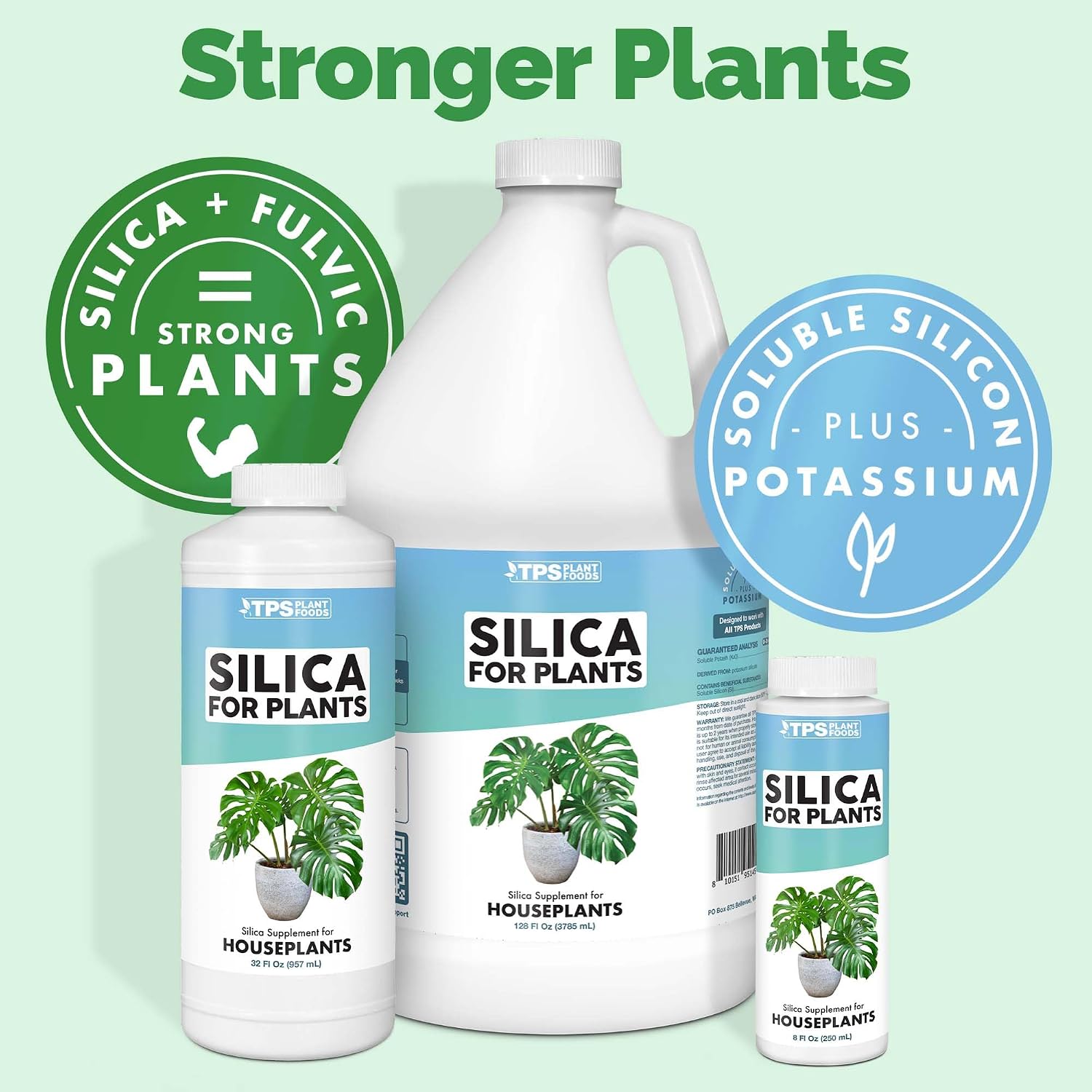
TPS
$11.99
In stock on Amazon
Check price on AmazonMid-tier liquid pick
Purpose-formulated aroid or tropical foliage liquid concentrates — typically priced $18–$30 — are pre-balanced near the 3-1-2 ratio and often include chelated micronutrients. The chelation matters: it keeps iron and magnesium available at a wider pH range, reducing the interveinal yellowing that frustrates growers using generic formulas.
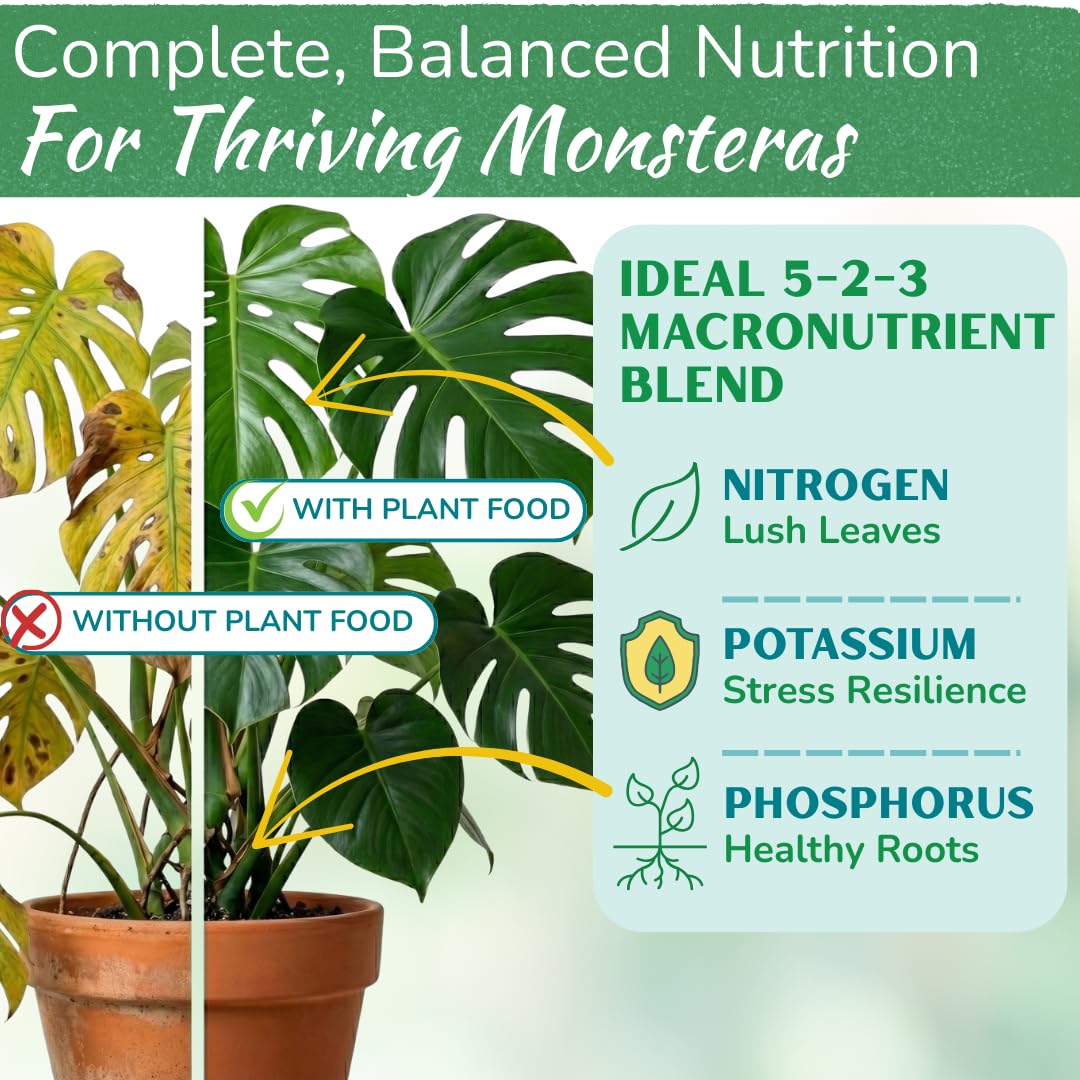
Monstera
$22.20
In stock on Amazon
Check price on AmazonPremium liquid pick
High-concentration professional-grade liquids or two-part systems (often used by orchid and aroid collectors) run $30–$55 for a season’s supply per plant. They offer the most granular control — you can independently adjust the nitrogen component week to week as growth rate shifts. Worth the cost for specimens valued at $200 or more, where correcting a nutrient deficiency after visible leaf damage is not an acceptable outcome.

Big
$23.95
In stock on Amazon
Check price on Amazon[BUYING_GUIDE: liquid fertilizer for aroids/monsteras, mid-range $15–$35]
Granular and Slow-Release Fertilizers
Slow-release granules (often labeled “controlled-release”) work by encapsulating nutrients in polymer or sulfur coatings that break down over weeks or months, metering nutrients steadily with each watering. The practical benefit is obvious: you apply once every three to six months and largely stop thinking about it. The Spruce’s “How to Fertilize Houseplants” (thespruce.com) notes that slow-release products are particularly well-suited to growers who travel frequently or run larger collections where weekly liquid application isn’t realistic.
The tradeoffs, however, are meaningful for serious aroid collectors:
- You can’t dial in response quickly. If your plant isn’t responding — or is showing stress — you can’t simply reduce the dose. The granules continue releasing.
- Temperature sensitivity. Polymer-coated granules release faster in warm conditions. An aroid in a bright grow tent running 80°F or above may receive a heavier nutrient pulse than expected, potentially pushing salts into the root zone.
- Phosphorus-heavy formulas are common in the mass-market segment. Many granular products designed for general garden use run ratios like 14-14-14 or 10-10-10. Balanced sounds sensible, but in practice it means more phosphorus than foliage aroids need. Over time, excess phosphorus can interfere with micronutrient uptake — particularly iron and zinc — contributing to interveinal chlorosis on new growth.
Budget granular pick
General-purpose controlled-release pellets in a 14-14-14 formulation are inexpensive ($10–$15 per container) and widely available. Acceptable for low-stakes tropical foliage plants in outdoor beds, but the balanced phosphorus ratio makes them a compromise for dedicated aroid containers. Use at half the label rate and supplement with monthly liquid feeding to avoid phosphorus accumulation.
TPS
$11.99
In stock on Amazon
Check price on AmazonMid-tier granular pick
Tropical or palm-specific controlled-release formulas — typically labeled near 15-5-15 or 13-6-13 — are better calibrated for foliage-heavy plants. Priced around $18–$28, these hit closer to the nitrogen-to-potassium balance aroids prefer while keeping phosphorus in a supporting role. Apply at full label rate every four months.
Monstera
$22.20
In stock on Amazon
Check price on AmazonPremium granular pick
Professional-grade controlled-release products used in nursery production offer precision coating technology that releases more consistently across temperature fluctuations. These cost more per ounce ($28–$45) but reduce the risk of hot spots in warm grow environments. For collectors running heated greenhouses or high-light grow setups where temperatures regularly exceed 78°F, the consistent release curve justifies the premium.
Big
$23.95
In stock on Amazon
Check price on Amazon[BUYING_GUIDE: slow-release granular fertilizer for tropical houseplants, $12–$28]
The NPK Numbers That Actually Matter for Fenestration
Here’s where most intermediate growers get stuck: they’ve read that nitrogen matters, they’ve bought a high-nitrogen product, but they’re still not seeing the splits they expected. The issue is usually one of three things — timing, micronutrients, or light limiting the ceiling.
By the numbers:
| Goal | Target NPK Range | Notes |
|---|---|---|
| Vigorous leaf growth (size, frequency) | 3-1-2 ratio family (e.g., 9-3-6) | Nitrogen-dominant; best for growing season |
| Establishing a new or recently repotted plant | 1-2-1 ratio briefly | Higher P supports root establishment |
| Maintenance / off-season | Half-strength 3-1-2, monthly | Prevents starvation without pushing weak growth |
| Micronutrient deficiency correction | Balanced with chelated iron + magnesium | Separate from NPK; addresses yellowing |
Fenestration — the splits and holes — is primarily a maturity and light response, not a direct fertilizer outcome. But fertilizer accelerates the rate at which a plant reaches maturity. A well-fed monstera deliciosa that receives bright indirect light will reach fenestration-producing size faster than a nutrient-starved plant in the same conditions. The CTAHR “Plant Nutrient Management in Hawaii’s Soils” guidance supports this framing: nutrients support the physiological processes that produce complex leaf morphology, but they don’t override environmental limiting factors like light intensity or root volume.
Calcium and magnesium often get overlooked in the NPK conversation. Aroids grown in perlite-heavy mixes — which drain fast but hold almost no nutrients — are particularly vulnerable to calcium and magnesium deficiencies. A Cal-Mag supplement added to your liquid feed rotation once a month during growing season addresses this without disrupting your primary N:P:K balance.
[BUYING_GUIDE: Cal-Mag supplement for tropical houseplants, $12–$22]
Application Timing and Season Context
Zone and season context is non-negotiable for fertilizer decisions on aroids.
For mainland growers in USDA zones 9 and below, aroids are likely growing indoors year-round or spending summers outside. The practical growing season — the window where fertilizer is actively beneficial — typically runs March through September. Fertilizing through fall and winter pushes weak, etiolated growth the plant can’t support in lower light and encourages salt buildup in the root zone.
For Hawaii residents growing aroids outdoors or in lanai conditions, the calculus is different. Temperatures remain in the productive growth range year-round at most elevations, which means year-round feeding at a moderate rate — half to full strength, monthly — is appropriate rather than the seasonal on/off approach mainland growers use.
The University of Florida IFAS Extension “Fertilization of Landscape and Foliage Plants” notes that plants showing active growth — unfurling new leaves, extending stems — are safe to fertilize. Plants in visible stress, including wilting, yellowing, or recent repotting shock, should be stabilized before resuming a feed program.
The Decision Rule: If X, Then Y
If you’re building a collection of fewer than 15 plants and can commit to a bi-weekly routine during growing season: go liquid, 3-1-2 ratio, full-strength per label every two weeks. You’ll have real-time feedback, better control, and the ability to adjust cultivar by cultivar.
If you’re managing 20 or more plants, traveling regularly, or running aroids in an outdoor setup where hand-watering is infrequent: start with a slow-release granular at three-to-four month intervals, but choose a product in the 15-5-15 or 13-6-13 range rather than a balanced 14-14-14. Supplement with a liquid feed once a month during peak growing season to fill the gaps.
If you’re investing $300 or more in a collector specimen — a rare anthurium cultivar, a large-leaf monstera Thai constellation, a specimen philodendron gloriosum — don’t rely on slow-release alone. The precision and responsiveness of liquid feeding protects your investment by letting you detect and correct nutritional stress before it becomes permanent leaf damage. Liquid is worth the extra time at that price point.
If you’re seeing interveinal yellowing on new leaves despite a solid nitrogen program: your NPK is probably fine, and your micronutrients aren’t. Add a Cal-Mag supplement before changing fertilizers.
The right fertilizer won’t substitute for the right light or the right rootzone moisture balance. But among the variables you control at the product-purchase level, matching the NPK ratio to foliage growth is one of the most direct levers available. The numbers aren’t mysterious — they just need to match what the plant is actually trying to do.